
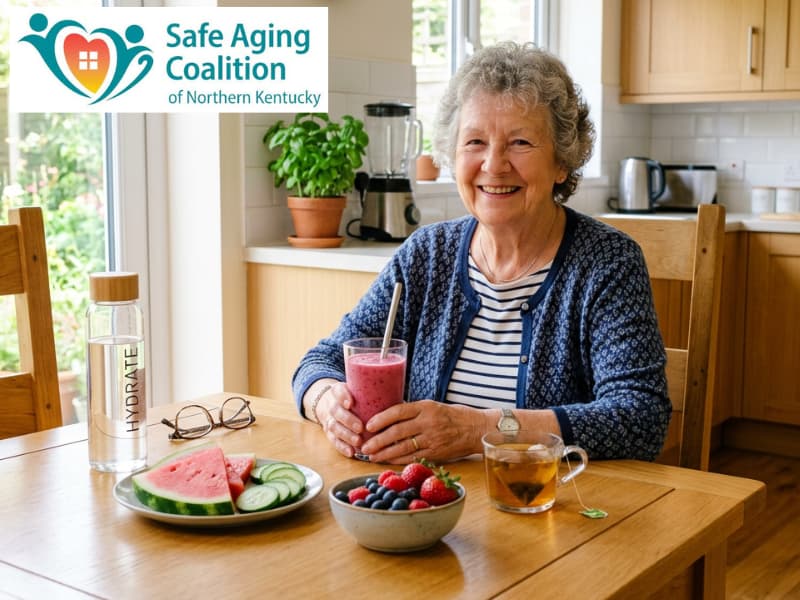
Staying Hydrated: A Simple Step Toward Safer Aging
When we think about fall prevention and overall safety for older adults, hydration may not be the first thing that comes to mind. But it should be. Proper hydration plays a key role in maintaining balance, energy, and clear thinking—all critical factors in reducing the risk of falls and supporting independent living.
As we age, our bodies naturally lose some of their ability to signal thirst. This means many older adults may not feel thirsty even when their bodies need fluids. As a result, dehydration can sneak up quickly and lead to serious health concerns such as fatigue, dizziness, confusion, urinary tract infections, and even hospitalization. In fact, chronic dehydration is more common than many people realize among seniors.
The good news is that staying hydrated doesn’t have to mean drinking plain water all day. There are plenty of enjoyable and effective ways to keep fluid levels up.
Warm beverages like herbal teas can be both comforting and beneficial. Many varieties support digestion, relaxation, and overall wellness while contributing to daily fluid intake.
Refreshing options like coconut water or low-sugar electrolyte drinks can help replenish fluids, especially during warmer months or after physical activity. These options can be particularly helpful for those who may not enjoy the taste of plain water.
Food can also be a powerful source of hydration. Fruits and vegetables such as watermelon, cucumbers, tomatoes, and lettuce contain high amounts of water and can easily be incorporated into meals or snacks. Soups, especially broth-based ones, are another excellent way to add both nutrition and hydration.
For a fun and cooling option, homemade popsicles made from fruit, herbal tea, or coconut water can be a great treat. They are especially helpful during hot weather and allow for control over sugar content.
Smoothies are another versatile choice. Blending fruits, vegetables, and a liquid base like milk or yogurt creates a nutrient-rich drink that supports hydration while also delivering important vitamins.
It’s also important to be mindful of beverages that can contribute to dehydration. Drinks high in caffeine or alcohol can have a diuretic effect, so moderating intake or choosing decaffeinated options can help maintain better hydration levels.
Simple habits can make a big difference. Keeping a favorite cup nearby, adding fruit for flavor, or using a straw can encourage more frequent sipping throughout the day. Caregivers and family members can also help by offering fluids regularly and watching for signs of dehydration such as dry mouth, fatigue, or confusion.
At the Safe Aging Coalition of Northern Kentucky, we believe that small, proactive steps can have a big impact on safety and quality of life. Staying hydrated is one of those steps. By making hydration a daily priority, older adults can support their health, maintain independence, and reduce risks that could lead to falls or other complications.
A safer life at home often starts with something as simple as a glass of fluid—whatever form that may take.