
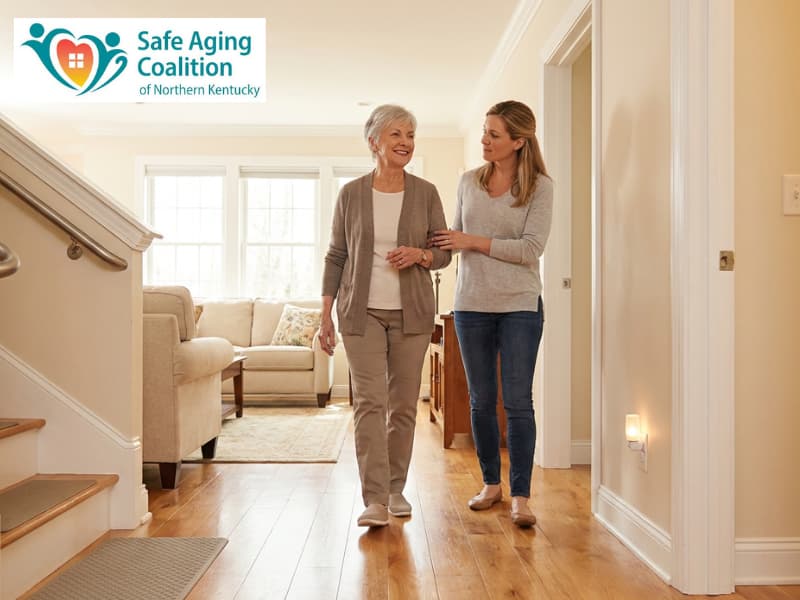
Senior Fall Prevention in Northern Kentucky: A Practical Guide to Safer Aging at Home
Falls are not an inevitable part of aging. With thoughtful home modifications, healthy routines, proper equipment, and community support, older adults can reduce fall risks while continuing to live active, independent lives.
The Safe Aging Coalition of Northern Kentucky (SACofNKY) helps aging and at-risk adults stay safe through fall-prevention education, awareness programs, demonstrations, and community services. The volunteer-led nonprofit serves residents of Boone, Campbell, Carroll, Gallatin, Grant, Kenton, Owen, and Pendleton counties.
This guide explains common fall risks, practical prevention strategies, and ways Northern Kentucky seniors and caregivers can find local support.
Why Is Senior Fall Prevention Important?
A fall can affect more than physical health. Even when a fall does not cause a serious injury, it may create anxiety, reduce confidence, and make someone hesitant to participate in everyday activities.
Fear of falling can lead an older adult to move less. Reduced activity may then contribute to weaker muscles, poorer balance, and greater dependence on others. Addressing fall risks early can help interrupt this cycle.
Fall prevention is not about limiting independence. It is about creating safer surroundings and giving older adults the confidence and resources to remain involved in their homes and communities.
What Causes Falls Among Older Adults?
Most falls do not have one single cause. They often result from a combination of personal, environmental, and health-related factors.
Common risks may include:
- Poor lighting in hallways, bedrooms, and bathrooms
- Loose rugs, electrical cords, or cluttered walkways
- Missing or unstable handrails
- Slippery bathroom and kitchen floors
- Improperly fitted shoes
- Difficulty with balance, strength, or mobility
- Vision changes
- Medication side effects
- Rushing to answer a telephone or use the restroom
- Using damaged or incorrectly adjusted mobility equipment
Recognizing these risks is an important first step. Families should approach the conversation respectfully, involving the older adult in decisions about changes to the home.
How Can Seniors Make Their Homes Safer?
A room-by-room safety review can uncover hazards that are easy to overlook.
Improve lighting
Good lighting is one of the simplest ways to support fall prevention. Add brighter bulbs where appropriate and make sure stairs, entrances, and frequently used paths are easy to see.
Nightlights can be especially helpful between the bedroom and bathroom. Place lamps within easy reach so no one must walk across a dark room to turn on a light.
Clear walking paths
Remove unnecessary furniture, boxes, shoes, and other objects from walkways. Secure electrical cords along walls and keep frequently used areas open.
Decluttering does not have to happen all at once. Start with high-traffic areas and focus on items that create immediate tripping hazards. SACofNKY’s educational presentation, “Less Stuff, Fewer Falls, More Life,” offers guidance related to decluttering and downsizing.
Examine floors and rugs
Repair loose flooring and consider removing unsecured throw rugs. If rugs remain in the home, use effective nonslip backing and check them regularly for curled edges.
Clean spills promptly, particularly in kitchens, bathrooms, and entryways. Be cautious with floor products that may leave a slick surface.
Make bathrooms easier to navigate
Bathrooms deserve special attention because hard surfaces and moisture can create additional risks. Depending on individual needs, helpful modifications may include grab bars, nonslip surfaces, improved lighting, and appropriately selected bathing equipment.
Before installing or using durable medical equipment, consider asking a qualified professional whether it is suitable, correctly sized, and safely positioned.
Check stairs and entrances
Keep stairs free of belongings. Handrails should be secure and easy to grip, and each step should be clearly visible. Repair uneven outdoor paths and provide adequate lighting near doors, porches, and driveways.
Seasonal weather can introduce new hazards, so outdoor areas should be reviewed throughout the year.
What Daily Habits May Help Prevent Falls?
Home safety is only one part of a complete prevention plan. Older adults and caregivers should also consider daily routines that support safe movement.
Stay physically active
Appropriate physical activity can help maintain strength, flexibility, coordination, and balance. The right activity depends on a person’s health and abilities, so anyone with medical concerns or a recent fall should consult a healthcare professional before beginning a new exercise program.
Wear supportive footwear
Choose shoes that fit properly and provide stable, nonslip support. Avoid walking in loose slippers, worn-out footwear, or socks on smooth floors.
Keep shoes in a convenient location to reduce the temptation to walk barefoot through the home.
Stand up slowly
Moving too quickly from a bed or chair may cause dizziness. Pause after sitting up and make sure you feel steady before walking. Report recurring dizziness, weakness, or balance problems to a healthcare provider.
Review medications and vision
Some medications—or combinations of medications—may affect alertness, balance, or blood pressure. A pharmacist or healthcare provider can review prescriptions, over-the-counter products, and supplements for possible concerns.
Regular vision care is also important because changes in depth perception or visual clarity can make obstacles more difficult to recognize.
What Should Families Do After a Fall?
Every fall should be taken seriously, even when there is no obvious injury. Seek appropriate medical assistance when needed and discuss the incident with a healthcare professional.
After immediate concerns are addressed, review what happened:
- Where did the fall occur?
- What was the person doing at the time?
- Was the area dark, cluttered, wet, or uneven?
- Did dizziness, weakness, pain, or urgency contribute?
- Was mobility equipment being used correctly?
- Has the person fallen or nearly fallen before?
The purpose is not to assign blame. It is to identify changes that may help prevent another incident.
SACofNKY’s “Roadmap to Navigating Change” presentation addresses challenges and difficult decisions that families may face following a fall.
Local Fall-Prevention Support in Northern Kentucky
Founded as a nonprofit organization in 2016, the Safe Aging Coalition of Northern Kentucky brings community partners together to promote health, wellness, and safer aging. Coalition members volunteer their time and talents to support fall-prevention efforts.
SACofNKY focuses on:
- Educational seminars and presentations
- Nightlights and durable medical equipment
- Online videos, blog posts, and virtual learning
- Programs for older adults and caregivers
- Adult health and wellness initiatives
- Community awareness and demonstrations
The Coalition is also backed by Kentucky’s Safety Prevention Alliance Network, known as KSPAN.
Frequently Asked Questions
Who does SACofNKY serve?
The Coalition serves aging and at-risk adults in Boone, Campbell, Carroll, Gallatin, Grant, Kenton, Owen, and Pendleton counties in Northern Kentucky.
Does SACofNKY offer fall-prevention education?
Yes. Its programs include general fall-prevention education, decluttering and downsizing guidance, and information about navigating life changes following a fall.
Can community members volunteer?
Yes. Volunteer opportunities may include marketing, fundraising, educational presentations, event planning, and direct community services.
Where can I learn more?
Visit SafeAgingNKY.org to explore educational videos, fall-prevention tips, resources, services, events, volunteer opportunities, and ways to support the Coalition.
Take the Next Step Toward Safer Aging
Preventing falls begins with awareness, but meaningful change happens through practical action. Check the lighting. Clear the hallway. Review medications. Ask for help selecting equipment. Most importantly, include older adults in every decision affecting their homes and independence.
To learn more about senior fall prevention in Northern Kentucky, contact the Safe Aging Coalition of Northern Kentucky at 859-250-9134 or visit SafeAgingNKY.org. Together, families, caregivers, volunteers, and community partners can create safer homes and stronger paths to healthy aging.
Suggested SEO title: Senior Fall Prevention Tips and Resources in Northern Kentucky
Meta description: Learn practical senior fall-prevention tips and find local safety education, resources, equipment support, and volunteer opportunities through SACofNKY.